Ontario riders are stuck.
Let's give them momentum.
Lane filtering — moving slowly past stopped or crawling traffic — is legal across much of the world and a growing list of U.S. states. In Ontario it's still a legal grey zone that leaves riders sitting exposed in gridlock. We're pushing to change that.
We're just riders — not lawyers, not lobbyists, not government. This page makes one specific, safety-backed ask to Queen's Park: legalize slow, careful lane filtering. Skim the case below at your own pace, or jump straight to what you can do. Don't ride? You can still help — see how.
The campaign needs momentum too.
Every signature and every message to an MPP adds force behind this. Here's where things stand.
Placeholder numbers for now — wire this to your live petition count once it's created (see the "Take Action" section below).
Sitting still is the dangerous part.
Ontario's highways and city arterials jam constantly — the 401, the DVP, the QEW. Motorcyclists get funneled into the same stopped traffic as everyone else, except they have no crumple zone.
Rear-end risk
A stationary motorcycle in a traffic queue is a sitting target for distracted drivers. Filtering to the front of a queue, or past a slow crawl, removes that exposure window.
Some of North America's worst gridlock
The GTA regularly ranks among the most congested regions on the continent. Every rider filtering past a jam is one less vehicle adding to it.
Clear rules today
Ontario's Highway Traffic Act doesn't explicitly address lane filtering — riders operate in a grey zone, enforced inconsistently under "unsafe passing" or "careless driving."
See what gridlock is actually costing you.
Drag the sliders to match your own commute. This is a rough estimate, not a promise — but the math adds up fast.
Rough estimate — assumes filtering saves roughly 50–70% of the time spent stopped or crawling in traffic (we use 60% here). Actual savings depend on road, traffic conditions, and rider judgment.
The data says careful filtering is safer, not riskier.
The most cited research is a 2015 UC Berkeley SafeTREC study of nearly 6,000 California motorcycle collisions, comparing riders who were lane-splitting/filtering at the time of the crash to those who weren't.
Head injuries
9% for filtering riders vs. 17% for other riders in a crash.
Torso injuries
19% for filtering riders vs. 29% for other riders.
Fatal injuries
1.2% for filtering riders vs. 3% for other riders.
The same study found the key safety factor isn't filtering itself — it's the speed differential. Risk rises sharply above roughly 15 mph (24 km/h) faster than surrounding traffic, and at speeds under about 50 mph (80 km/h). Any Ontario framework should build those limits in directly, the way Utah and California do.
Ontario would be joining a well-established practice, not inventing one.
A growing list of jurisdictions
- California — lane splitting
- Utah, Montana, Arizona — statewide lane filtering
- Colorado, Connecticut — filtering under specific low-speed conditions
- Most of Europe (France, UK guidance, Belgium, etc.)
Ontario and most of Canada
- No explicit permission or prohibition in the Highway Traffic Act
- Enforced ad hoc as "unsafe passing" or "careless driving"
- No standardized speed-differential rule for officers or riders to rely on
This isn't a fringe idea — it's a tested, growing global norm.
Government-run pilots in multiple countries have already measured this directly, not just guessed at it. The results keep landing the same way.
Permanently legalized after a multi-year trial. Filtering is allowed between the two left-hand lanes of motorways and dual carriageways, when traffic is under 50 km/h, with a maximum 30 km/h speed differential.
Explicitly permitted. Riders are expected to stay within roughly 15 km/h of surrounding traffic speed while filtering.
Legalized state-by-state starting in 2014 (NSW, Queensland, ACT, Victoria, WA). Typically capped around 30 km/h, and restricted to fully licensed riders.
No specific offence — the Highway Code supports careful, low-speed filtering (roughly 15–20 mph) past stationary or slow-moving traffic.
Broadly accepted as standard riding practice in queued or slow-moving traffic, with little friction between riders and drivers.
Widely practiced for decades, especially in dense urban traffic — it's simply part of how riders are trained and how traffic actually moves.
Crashes in an 8-week CBD trial
Sydney's 2013 pilot found 80–85% of filtering riders acted "appropriately and compliant[ly]," with zero crashes recorded during the trial. Lane filtering became permanent state law the following year.
Crashes attributed to filtering
"There has been no negative comments from the public," the local Riders Association reported after ACT's pilot — officials confirmed the trial "received positive feedback" before making the law permanent.
Adoption isn't universal — a handful of countries, including Germany and Switzerland, haven't formally legalized filtering yet. But everywhere it's actually been trialled and measured by a government, the direction of the result has been the same.
This isn't hypothetical for the people living it.
Every rider who's ever been boxed in on the 401 or baking in gear at a dead stop has a version of these. Here's a sample of what we hear most.
Composite, illustrative rider quotes reflecting feedback we hear often — not attributed to specific individuals.
What we're actually asking Queen's Park to do.
- Amend the Highway Traffic Act to explicitly define and permit low-speed lane filtering — not high-speed lane splitting.
- Set clear numeric limits, modeled on Utah/California data: filtering only when traffic is stopped or moving under ~50 km/h, and only at a moderate speed differential above surrounding traffic.
- Fund a rider-education module on safe filtering technique, similar to what other jurisdictions rolled out alongside legalization.
- Run a time-limited pilot — e.g. one GTA corridor — with MTO data collection, before a province-wide rule.
Three ways to add force to this.
This campaign isn't run by the Ontario government — it's a citizen push aimed at it. Two real routes exist to make your voice count officially.
Sign the petition
Add your name to build public pressure. Swap this link for your live Change.org (or similar) petition URL once it's created.
Sign the Petition →File an official ePetition
Ontario's Legislative Assembly runs a formal e-petition system, but it needs an MPP to sponsor and table it. This is the route that produces an official government response.
Ontario ePetitions →Email your MPP
A short, personal message to your own MPP carries more weight than a form signature. Pick your riding, we'll draft the letter — you review it and send it.
Every letter is randomly reworded from several phrasings of the same core points — so if you and other riders are all emailing MPPs, your messages won't read as an identical copy-paste campaign (which some offices auto-filter).
Mailto links truncate on some phones/clients if the message is long. If it opens blank or cut off, hit "Copy text" and paste into a new email instead.
Tell us how long you sit in traffic — it helps the case, and it counts as support.
Every rider who shares their commute makes the numbers sharper and shows there's real momentum behind this. Ten seconds, no email or account needed. Don't ride? Sharing this page or emailing your MPP above counts just as much — congestion relief isn't a riders-only benefit.
This tally is local to your browser for now — a preview of what a live, sitewide average looks like. All it's used for is that average; nothing here is tied to your identity.
Your submissions
Bookmark that link to see your own history again later — no login, nothing stored in your browser.
Before you go — the honest answers to the obvious questions.
What's the difference between lane filtering and lane splitting?
Lane filtering means moving slowly past traffic that's stopped or crawling — that's the only thing this campaign is asking for. Lane splitting usually means riding between lanes of faster-moving traffic, which is a different (and riskier) practice this campaign isn't asking Ontario to permit.
Is this legal in Ontario right now?
No, not explicitly. The Highway Traffic Act doesn't address lane filtering, so riders operate in a grey zone today and can be ticketed under general rules like unsafe passing or careless driving.
Won't this make things more dangerous for drivers?
The data says the opposite for riders, and government-run trials in New South Wales and the Australian Capital Territory (Australia) recorded zero crashes attributed to filtering during their pilot periods. See The Safety Case and Around the World above.
What speeds are we actually talking about?
Traffic under roughly 50 km/h, with the rider no more than about 15–30 km/h faster than surrounding vehicles — the same kind of numeric limits used in Utah, California, and New South Wales.
Who's behind this campaign?
It's rider-led and independent — not affiliated with the Government of Ontario or the Legislative Assembly of Ontario.
I don't ride a motorcycle. Can I still help?
Yes — you don't need to ride to support less gridlock and safer roads. Share this page, or use the letter generator above to email your MPP as a concerned constituent.
What's happened so far.
This is a living campaign — new entries get added here as things move, not just when there's good news.
Campaign site launched
Let Ontario Filter goes live with the full case for legalizing low-speed lane filtering: the safety data, international comparisons, and a specific legislative ask.
MPP letter tool and commute-time heuristics added
Riders can now generate a personalized letter to their MPP and contribute their own traffic time to the sitewide average.
Joined the Riders Voice Canada advocacy network
Let Ontario Filter is now part of a broader national push for rider advocacy, education, and community — more on that soon.
Where this campaign started — and worth watching directly.
This whole push began after watching a Texas rider make almost the same case to his own state legislature. Linked here at the source, along with two clear explainers on the filtering-vs-splitting distinction — full credit to their creators; these are their videos, watch them on YouTube.

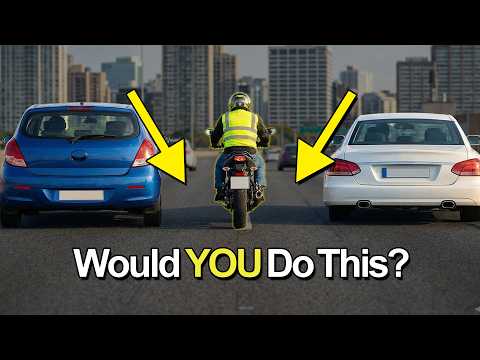
These are links to the original creators' videos on YouTube, not embedded or reproduced content — clicking one opens it on their channel.